
Six steps, and a number at every one of them.


It starts as stock, not as a lead time.

Printed the way your shop already prints.


Heat sets the colour, and heat moves the cloth.


Packed so it arrives the shape it left.

Into a frame, a channel, or the air.


And then somebody turns the light on.

48%light through
How it works
What happens to a roll between here and your wall.
Every number on this page is transcribed from the spec sheet of the fabric it describes. Where a figure is a range, it is a range because the nine differ — and the sheet for each one says which.
-
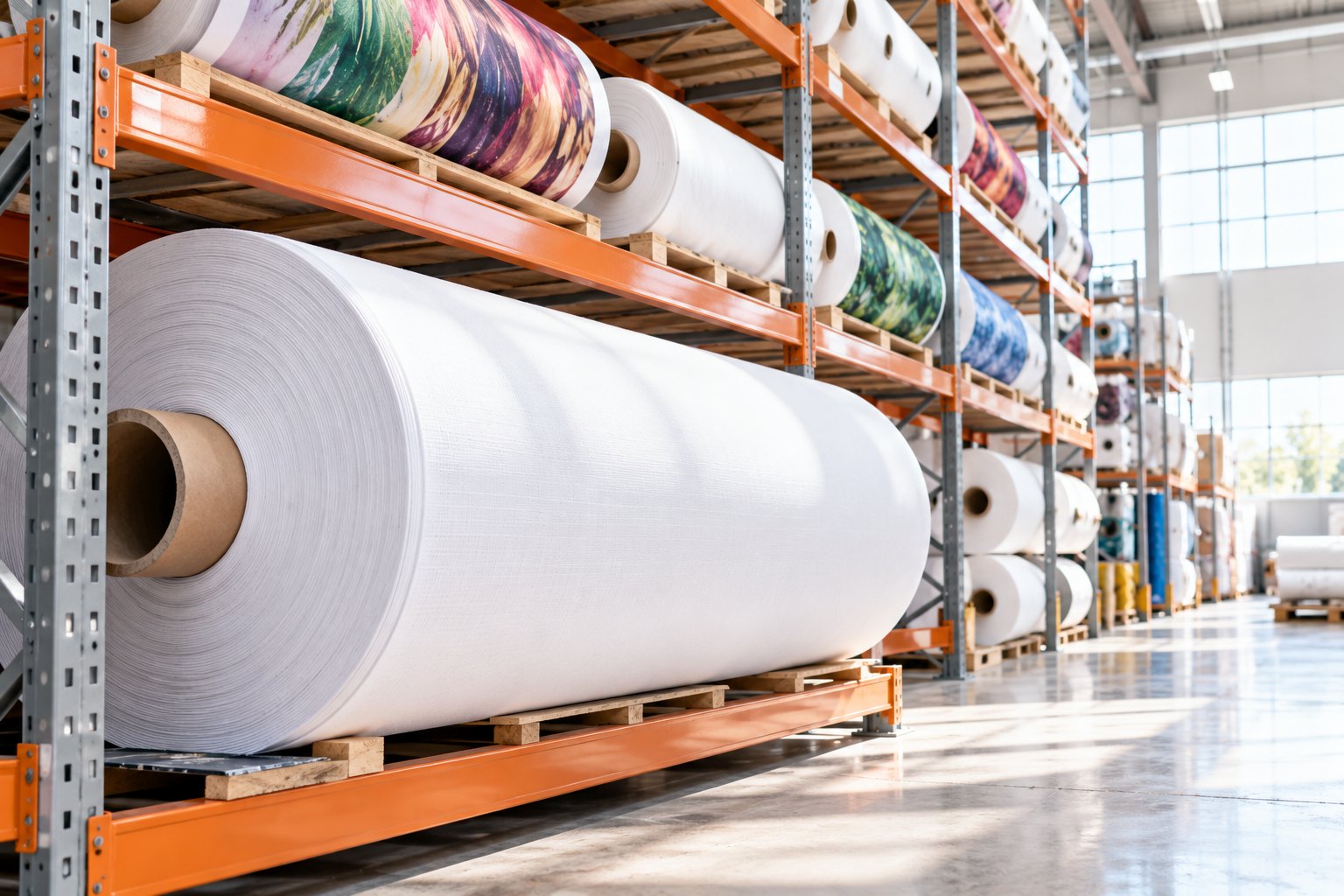
Step one · the roll
It starts as stock, not as a lead time
Every house fabric is held on the shelf in Anaheim in its standard widths. The width you order is the width that ships — nothing is slit down from a master roll and billed as a custom cut.
Where the job needs a width that is not standard, eight of the nine are made to order instead of trimmed, which is the difference between paying for the fabric you use and paying for the fabric you throw away.
- Standard widths
- 160 / 250 / 320 cm
- Custom
- 100–500 cm, made to order
- Roll lengths
- 50 / 75 / 100 m
- Widest single piece
- 500 cm (Eos)
-
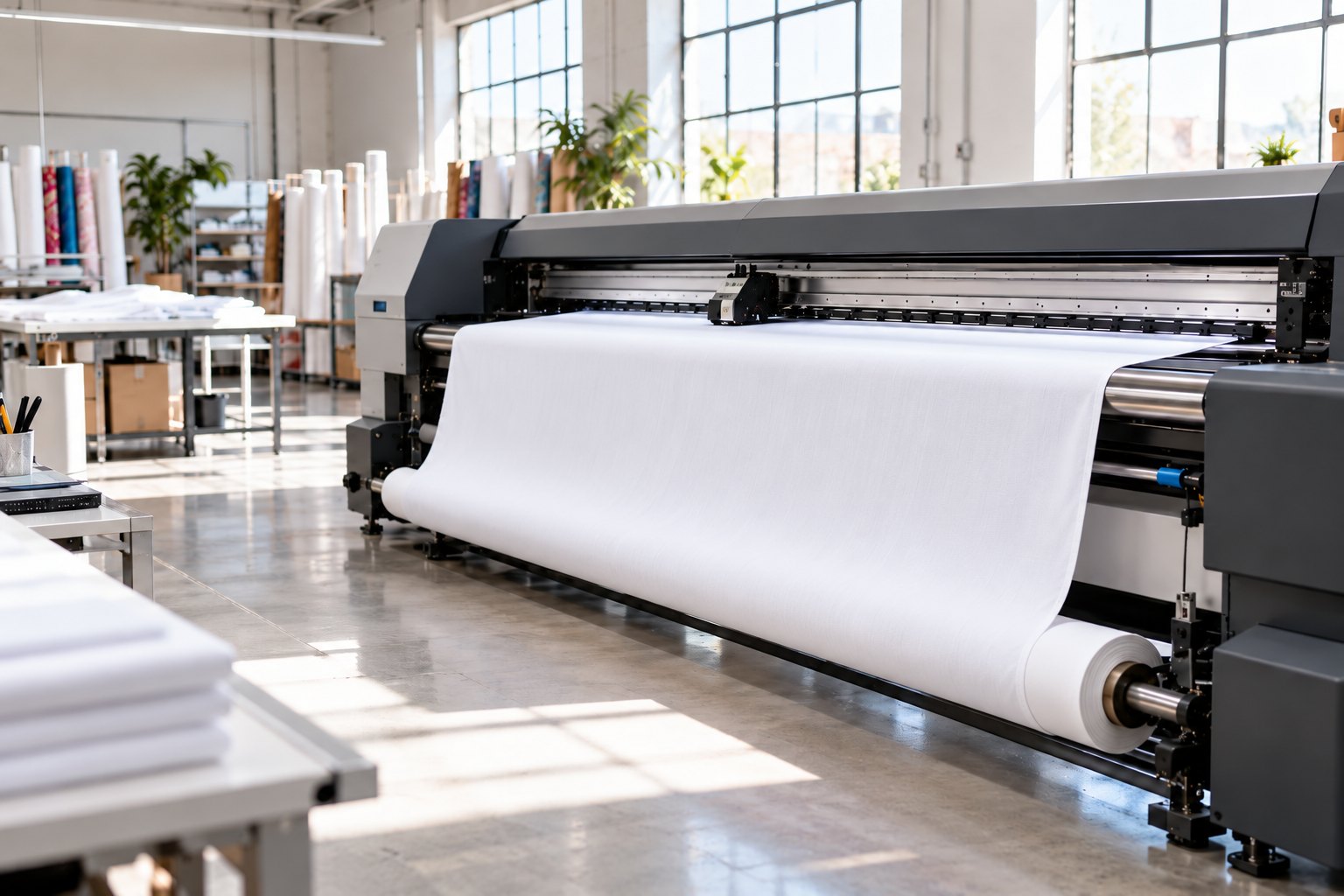
Step two · the print
Printed the way your shop already prints
Six of the nine take dye-sublimation direct as well as transfer. Rio takes UV, latex and solvent. Eos takes UV. Five take silk-screen. Nothing here asks you to buy a different press.
Which ink each fabric accepts is published per SKU, not described as “wide compatibility” and left for you to find out on a deadline.
- Dye-sub transfer
- All nine
- Dye-sub direct
- Six of nine
- UV
- Rio, Eos
- Latex
- Rio
- Silk-screen
- Tesa, Aureline, Lumex, Ghost
-
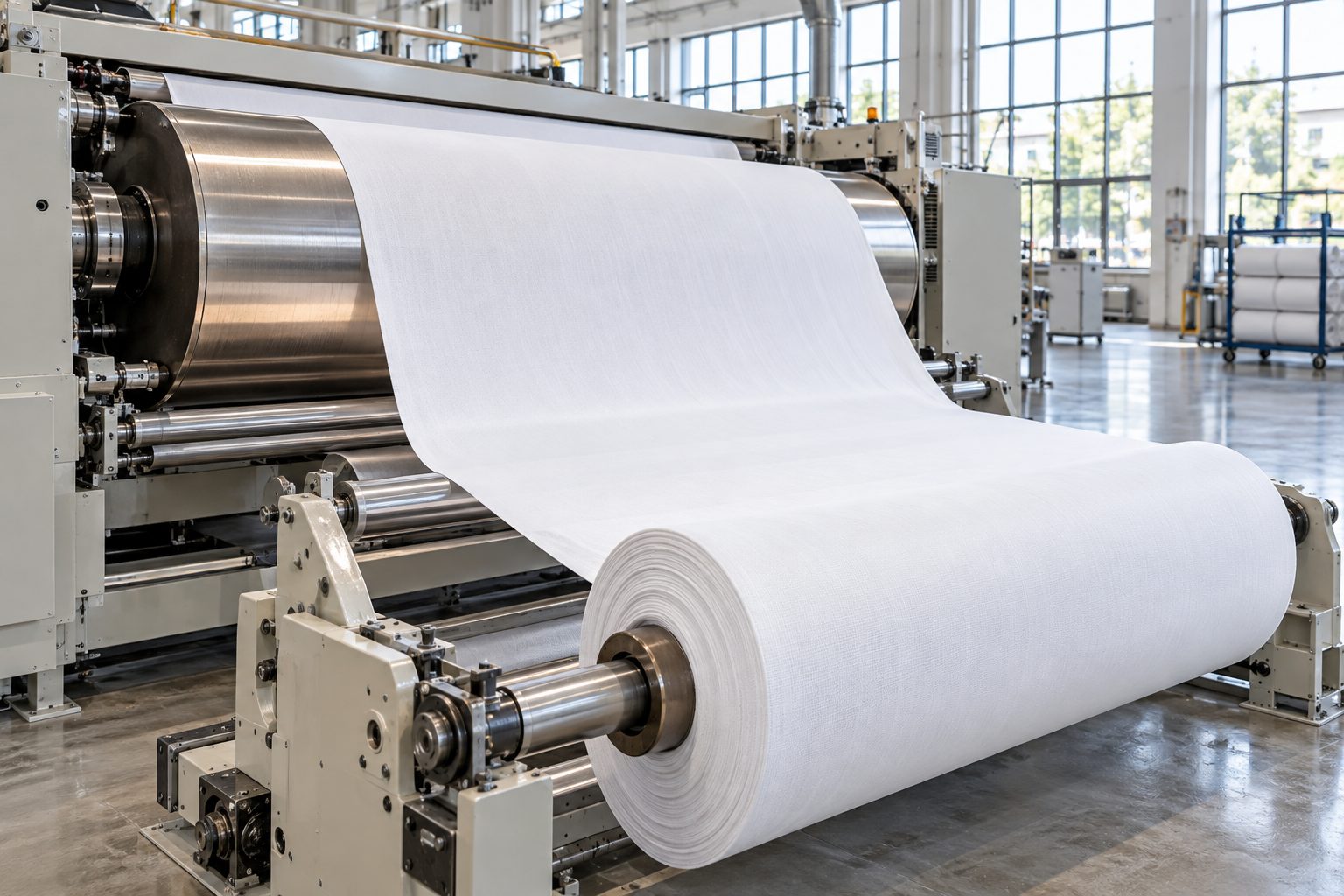
Step three · the fix
Heat sets the colour, and heat moves the cloth
Transfer happens between 180 °C and 205 °C depending on the fabric, and the same heat that fixes the dye shrinks the material. That is not a defect; it is a number, and it is the number that decides whether a finished panel fits its frame.
Every sheet publishes shrinkage measured warp and weft, against the limit, with the result beside it. Put the finished size into the fit check on the homepage and it does the arithmetic for you.
- Transfer window
- 180–205 °C
- Dwell
- 0.65–2 min
- Shrinkage, limit
- < 2 %
- Tesa, measured
- 1.0 % L · 0.6 % W
-
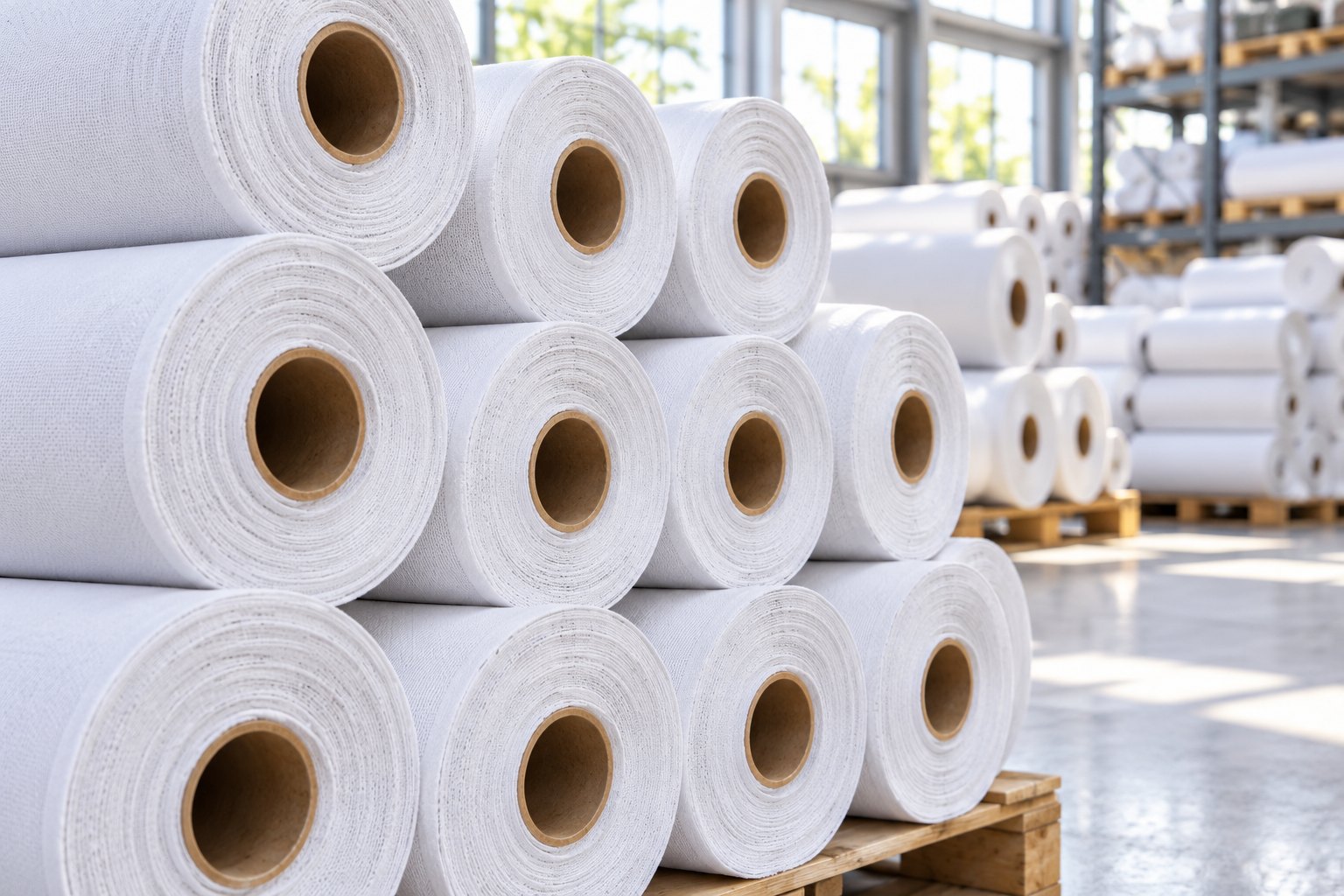
Step four · the pack
Packed so it arrives the shape it left
Two options, both on a 3″ core and both individually packed. The woven outer bag is the everyday choice; the hard tube with nail and screw caps is for freight that gets handled more than once.
Roll length runs to a ±10% tolerance, published, because a roll quoted at 50 m and delivered at 46 m is a conversation nobody enjoys having after the fact.
- Core
- 3″
- Option 1
- Plastic bag, woven outer
- Option 2
- Hard tube, nail/screw caps
- Length tolerance
- ±10 %
-
Step five · the install
Into a frame, a channel, or the air
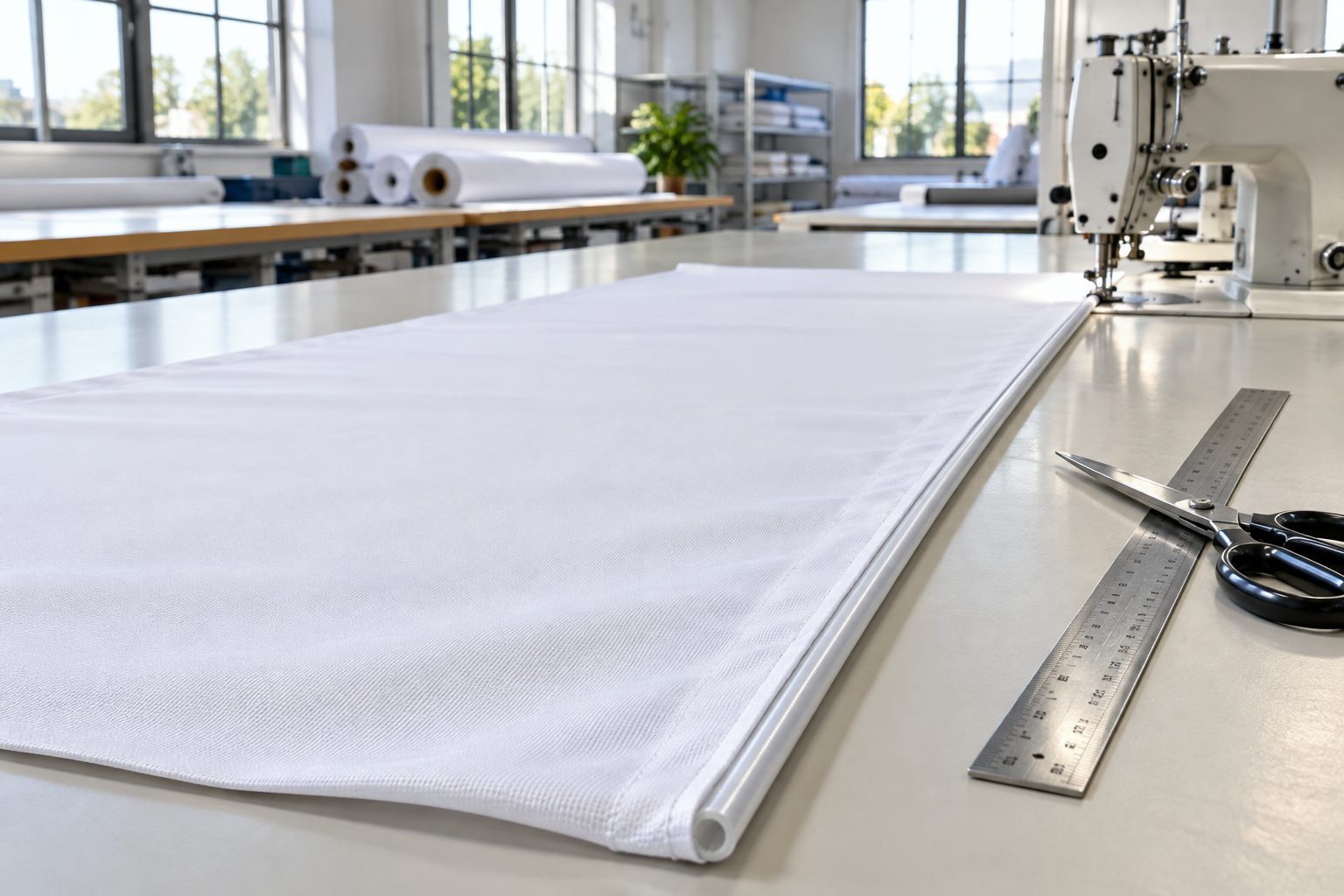
Silicone edge into an extrusion, pole pocket, grommets, or hung double-sided from truss. Halo hot-cuts to a sealed edge. Rio recovers flat after install and re-install, which matters on a stand that goes up and down twelve times a year.
Stretch is published warp and weft for the ones where it decides the fit, because a fabric with the wrong give either bows in the channel or will not reach it.
- Finishes
- SEG, pole pocket, grommet
- Halo edge
- Hot cut, sealed
- Rio
- Four-way stretch, recovers flat
- Eos
- 5 m with no seam
-
Step six · the light
And then somebody turns the light on
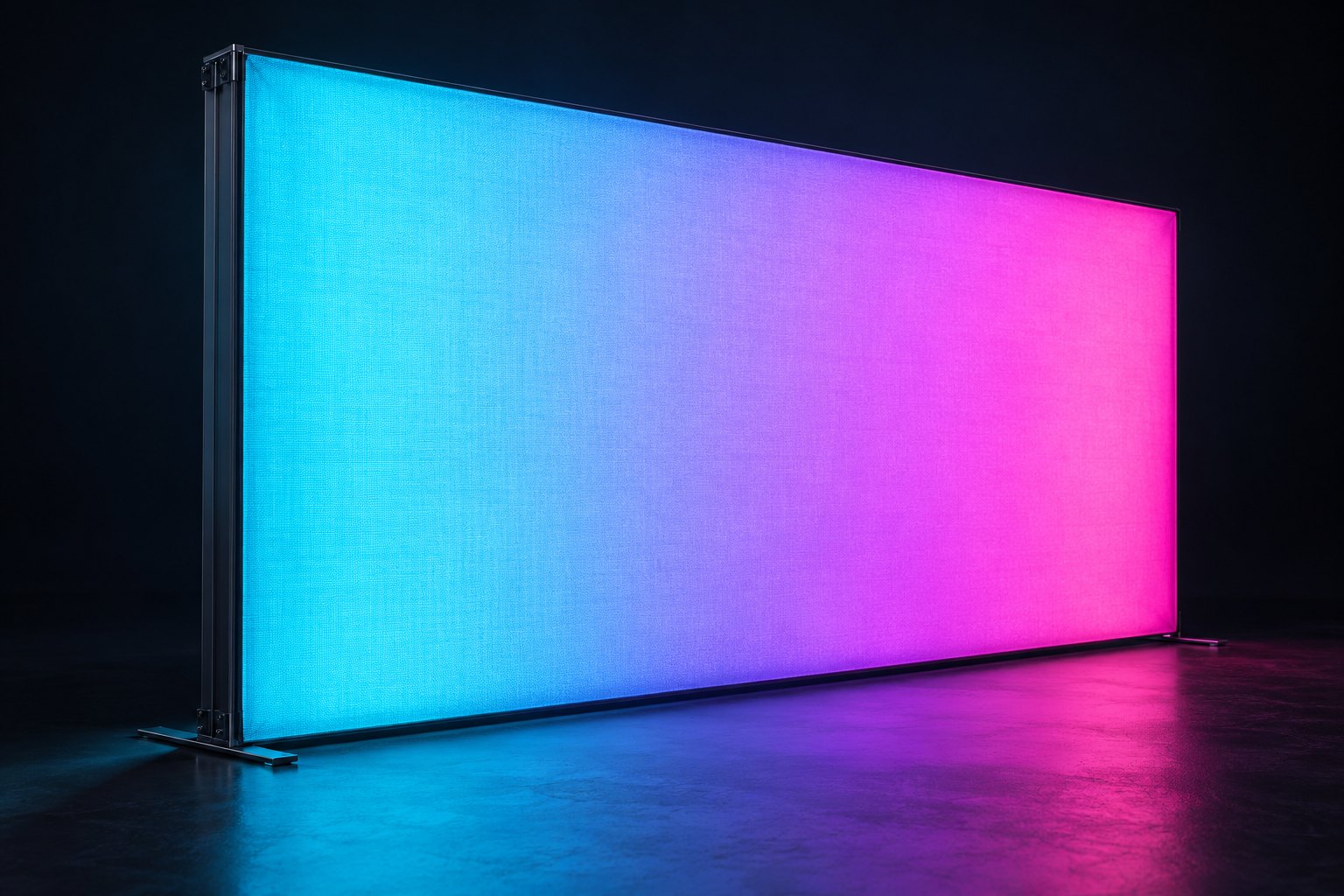
This is where a soft signage fabric is actually judged, and where the category usually stops publishing. Halo passes 48% of the light through. Eos passes none. The four in between each have a figure, measured to a named method.
Nobody has to take our word for any of it. The panel is on every product page, with the standard, the result and a pass column — and three yards of printable test roll will settle the argument on your own press.
- Halo
- 48 % transmission
- Eos
- 100 % opaque
- Method
- FZ/T 62025-2015
- Test yardage
- 3 yards, full width
Photography on this page is illustrative and shows generic equipment and unbranded material; it is not Epic's facility and the fabric in it is not printed with Epic artwork. The numbers are not illustrative — every one is from a published spec sheet, and the sheet is on the product page.
Before you commit a job
Tell us the machine and the finished size.
That is usually enough to narrow nine fabrics to one. If it is not, we will send yardage and let your press decide.
Where we are
725 E. Debra Ln.Anaheim, CA 92805
Call
Monday–Friday, 8 AM–4:30 PMBefore you spend a dollar
Swatch box tabbed by application, and three yards of printable test roll with the ICC profile emailed with it.